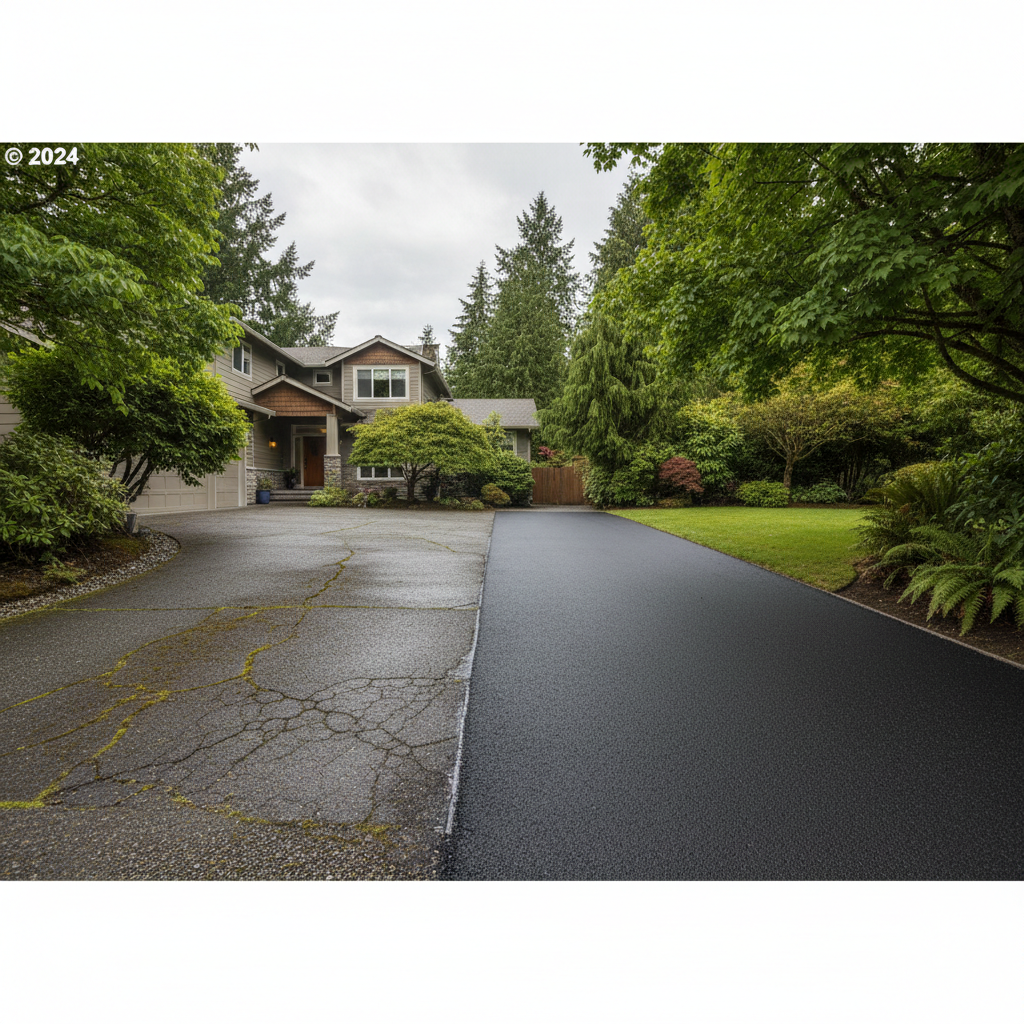
Your asphalt driveway is showing its age, and you know it's time to do something about it. But what's the best approach? You've probably heard terms like 'overlay' and 'full replacement,' and it can get confusing pretty fast. As a contractor who's been working on driveways and parking lots around Redmond for years, I see this dilemma all the time. Let's cut through the jargon and talk about what these options really mean for your home.
Asphalt Overlay: The Resurface Option
An asphalt overlay, sometimes called resurfacing, is essentially putting a new layer of asphalt right on top of your existing one. Think of it like a fresh coat of paint, but for your driveway. It's a popular choice for a few good reasons.
When an Overlay Makes Sense
This is a great option if your current driveway is mostly sound. I'm talking about a surface that has some cracks, maybe a bit of fading, but isn't falling apart. If the base underneath is still solid and you don't have major drainage issues or extensive alligator cracking (that looks like alligator skin, hence the name), an overlay can give you a beautiful, smooth new surface without the higher cost and disruption of a full tear-out.
Pros of an Overlay:
- Cost-Effective: Generally, an overlay is significantly cheaper than a full replacement because we're not digging up and hauling away tons of old material.
- Faster Installation: It's a quicker process. Less demolition means less time our crew is on your property, and you get your driveway back sooner.
- Less Disruptive: No heavy excavation means less mess and less impact on your landscaping or surrounding areas.
- Good for Minor Issues: It effectively covers minor cracks, surface imperfections, and restores that deep black look.
Cons of an Overlay:
- Doesn't Fix Underlying Problems: This is the big one. If your base is failing, or you have serious drainage issues causing constant puddles, an overlay won't magically fix those. The new layer will eventually crack in the same spots as the old one if the root cause isn't addressed.
- Limited Lifespan if Base is Bad: If the existing asphalt is too far gone, an overlay might only last a few years before problems resurface.
- Slightly Higher Grade: Your driveway will be a bit higher than it was before, which usually isn't an issue, but it's something to consider for garage entrances or transitions to sidewalks.
Full Depth Replacement: The Start-Fresh Approach
A full depth replacement means we're tearing out everything – the old asphalt, and often some or all of the underlying base material. Then, we prepare a brand new sub-base, lay down fresh aggregate, and finally, install new layers of asphalt. It's a complete rebuild from the ground up.
When a Full Replacement is Necessary
If your driveway looks like a patchwork quilt of repairs, has significant potholes, major alligator cracking across large areas, or noticeable dips and humps from a failing base, then an overlay is just putting a band-aid on a broken leg. You need a full replacement. This is especially true in areas like Redmond where we get a lot of rain, and if water is constantly sitting on or under your asphalt, it's going to wreak havoc on the sub-base over time.
Pros of a Full Replacement:
- Longest Lifespan: When done right, with a properly prepared base, a new asphalt driveway can last 20-30 years or more. You're getting a completely new, structurally sound surface.
- Addresses Root Causes: We can fix drainage problems, improve the sub-base, and ensure a solid foundation. This is crucial for preventing future issues.
- Best Appearance: A brand new driveway, from the ground up, looks pristine and adds significant curb appeal.
- Increased Property Value: A well-done new driveway is a solid investment in your home.
Cons of a Full Replacement:
- Higher Cost: This is the most expensive option because of the extensive labor, demolition, hauling, and new materials involved.
- More Time-Consuming: The process takes longer due to the excavation and multiple layers of material.
- More Disruptive: Heavy equipment, lots of debris, and a longer period where your driveway is inaccessible.
Which One Should You Choose for Your Redmond Home?
Alright, so how do you decide? Here's my honest take:
If your driveway has minor surface issues, some small cracks, and the overall structure feels solid when you walk or drive on it, an overlay is probably your best bet. It's a great way to refresh your property's look without breaking the bank. Just make sure those underlying issues aren't severe.
However, if you've got significant potholes, widespread cracking, areas that consistently hold water, or if you've noticed parts of your driveway sinking or heaving (especially common with our clay soils here around Bear Creek), then you really need to consider a full depth replacement. Trying to save money with an overlay on a failing base is usually a false economy. You'll end up paying more in the long run when that overlay fails prematurely and you still have to do a full replacement.
The best way to know for sure is to have a professional take a look. We'll come out, assess your driveway's condition, check the base, and talk through your options. At Aim High Paving Solutions, we're not going to push you into something you don't need. We'll give you an honest assessment and a clear recommendation based on what we see. We want you to have a driveway that lasts, whether that's with a smart overlay or a complete rebuild.