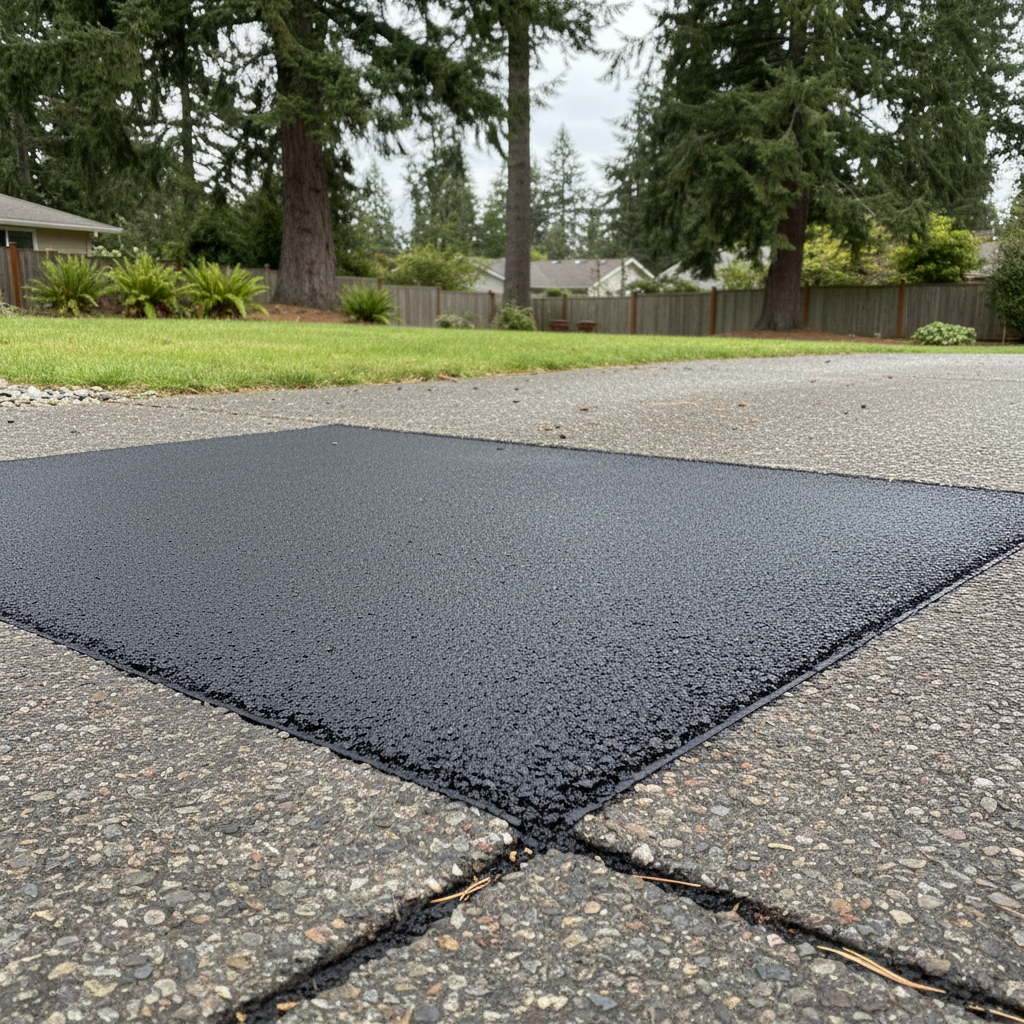
Your asphalt driveway takes a beating, especially with our Redmond weather. From the freezing rain to the hot summers, it's bound to show some wear and tear. When you start seeing cracks or potholes, you're probably wondering what to do. I get a lot of questions about patching, so I've put together some straight answers for you.
What's the difference between patching and repaving?
This is probably the most common question I hear. Think of it this way: patching is like putting a band-aid on a cut. It's for isolated damage – a pothole, a significant crack, or a small area that's crumbling. We're cutting out the bad section and replacing just that part. It's a targeted repair. Repaving, on the other hand, is a much bigger job. That's when we're either putting a new layer of asphalt over your entire existing driveway (an overlay) or completely removing the old asphalt and laying down a brand new one from scratch. You patch when the damage is localized and the rest of the driveway is still in decent shape. You repave when the whole surface is failing, has extensive cracking, or is just plain worn out.
When is patching a good idea, and when is it a waste of money?
Patching is a good idea when you're dealing with specific, contained issues. A single pothole, a few alligator cracks in one spot, or a section that's sinking a bit due to a localized sub-base issue – these are all good candidates for patching. It's a cost-effective way to extend the life of your driveway and prevent minor problems from becoming major ones. It's a waste of money, though, if your entire driveway looks like a spiderweb of cracks, or if the asphalt is crumbling everywhere. If more than, say, 25-30% of your driveway needs patching, you're probably better off considering an overlay or full replacement. You'll spend more on piecemeal repairs than you would on a comprehensive solution, and the patched areas might not blend well or hold up as long if the underlying issues are widespread.
What kind of patching methods do you use?
There are a few ways to patch, and the best method depends on the type and severity of the damage. For smaller, shallower potholes, we might use a 'throw-and-roll' method with cold patch asphalt, but that's really just a temporary fix. For anything that's going to last, we're usually talking about 'cut and patch' or 'infrared patching'.
- Cut and Patch: This is the most common and durable method. We'll saw-cut around the damaged area, remove the old asphalt down to the stable base, clean out any debris, apply a tack coat (an adhesive layer), and then fill it with hot mix asphalt. We compact it thoroughly, and when it's done right, it creates a very strong, long-lasting repair.
- Infrared Patching: This is a neat technique for certain types of repairs, especially for surface cracks or shallow potholes. We use an infrared heater to soften the existing asphalt around the damaged area. Then we rake it, add a bit of new asphalt and rejuvenating agents, and re-compact it. It creates a seamless repair because you're essentially fusing new material with the old. It's great for blending and can be very efficient for the right job.
We'll always assess your specific situation to recommend the best approach. Sometimes, especially in areas with heavy clay soils like we see around Avondale Road, you might even have sub-base issues that need to be addressed before patching, or the patch won't hold.
How long does an asphalt patch usually last?
A properly done asphalt patch, using hot mix asphalt and the cut-and-patch method, can last for many years – often 5 to 10 years, sometimes even longer, especially if the rest of the driveway is well-maintained with regular sealcoating. Infrared patches also hold up very well. The lifespan really comes down to the quality of the original repair, the condition of the surrounding asphalt, and how well the driveway is cared for afterward. If you just throw some cold patch in a pothole, don't expect it to last through a single Redmond winter. But a professional, hot-mix patch from a company like Aim High Paving Solutions? That's built to endure.
Can I just do it myself with stuff from the hardware store?
You can, but I generally don't recommend it for anything beyond a very temporary, emergency fix. The cold patch asphalt you buy in bags at the hardware store is different from the hot mix asphalt we use. It's designed to be workable at ambient temperatures, but it doesn't achieve the same density or bond as hot asphalt. It's also harder to compact properly without the right equipment. You might fill a pothole, but it's likely to sink, crack, or pop out within a few months, especially with our heavy rains. For a patch that will truly last and protect your investment, you really need professional tools, materials, and expertise. It's not just about filling a hole; it's about preparing the area, ensuring proper drainage, using the right materials, and compacting it correctly.
What should I look for in a contractor for asphalt patching?
Don't just pick the cheapest bid. Here's what you should be looking for:
- Experience with asphalt, specifically patching: Make sure they know the different methods and can explain why they're recommending a particular one for your situation.
- Proper equipment: They should have the right saws, compactors, and access to hot mix asphalt. If they're showing up with just shovels and bags of cold patch, that's a red flag.
- Local knowledge: A contractor who understands Redmond's specific climate, soil conditions, and common asphalt issues is a huge plus. We know about the freeze-thaw cycles and how they affect asphalt here.
- References and reviews: Ask for them! See what other homeowners in the area have to say about their work.
- Clear communication and a detailed quote: You should understand exactly what they're going to do, what materials they'll use, and what the cost includes.
Don't let those small cracks turn into big problems. Get them patched right, and your driveway will serve you well for years to come.