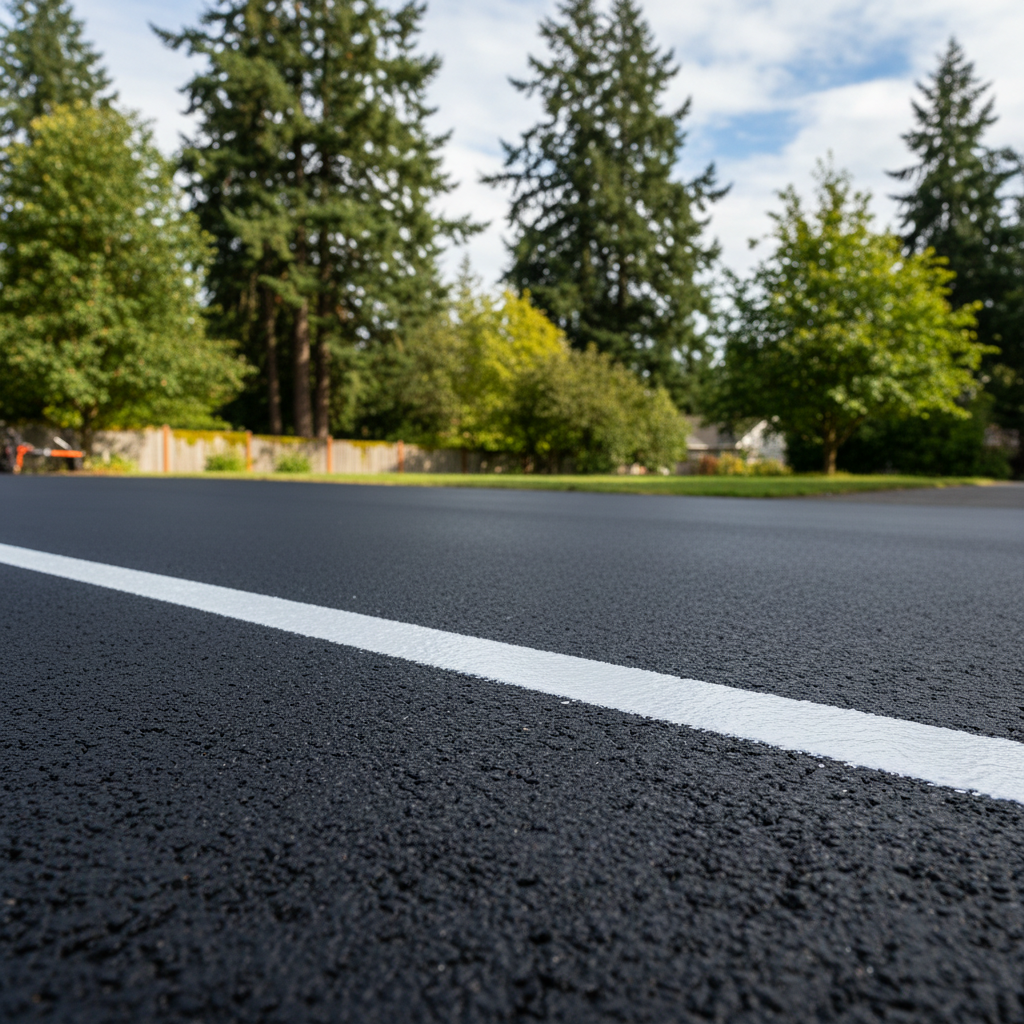
You're thinking about getting some asphalt striping done, maybe for a shared driveway, a private road, or even just marking out parking spots on your property. Good idea. But I bet you've got questions, and that's totally normal. I get asked a lot of the same things by folks right here in Redmond, from Education Hill to Bear Creek. So, let's just get into it and answer some of the most common questions I hear about asphalt striping.
What's the difference between striping paint and regular paint? Can't I just use exterior house paint?
No, you absolutely cannot just use exterior house paint. That's a quick way to waste your time and money. Striping paint, or traffic paint as we call it in the industry, is engineered for completely different conditions. It's designed to withstand constant vehicle traffic, UV exposure, oil, gasoline, and the kind of wet, cold weather we get here in Redmond for half the year. Regular house paint will chip, flake, and fade within weeks, especially with cars driving over it. Traffic paint has specific binders and pigments that make it durable, abrasion-resistant, and quick-drying, so it can handle the abuse. It's also often reflective, which is a big safety feature.
How long does asphalt striping actually last?
That's a tough one to give a single number for because it depends on a few things. First, the quality of the paint matters a lot. We only use high-grade, durable traffic paint at Aim High Paving Solutions. Second, traffic volume. A private road with only a few cars a day will hold up much longer than a busy parking lot. Third, weather. Our Redmond rain, combined with freeze-thaw cycles, can be tough on any surface, including paint. Generally, you can expect professionally applied striping to last anywhere from 1 to 3 years before it starts to look faded and needs a refresh. Some areas might hold up longer, others less, depending on direct sunlight exposure and wear.
Do I need to clean the asphalt before striping? What kind of prep work is involved?
Yes, absolutely. Prep work is probably 50% of the job when it comes to good striping. You can't just paint over dirt, leaves, oil, or loose gravel. If you do, the paint won't adhere properly, and it'll peel off in no time. We'll typically start by sweeping and blowing the surface thoroughly to remove all debris. If there are oil spots or stains, we'll clean those with a degreaser. Sometimes, pressure washing is necessary, but then we have to make sure the surface is completely dry before painting. Any moisture trapped under the paint will cause it to fail. Proper prep ensures the paint bonds well and lasts as long as possible.
What kind of lines can you paint? Is it just straight lines for parking?
Nope, it's not just straight lines. We can paint all sorts of things. Of course, we do parking stalls, arrows for traffic flow, handicap symbols, fire lanes, and crosswalks. But we can also do custom stenciling, like numbers for reserved spots, company logos, or even directional text. If you've got a specific design or symbol in mind for your property, chances are we can paint it. Just show us what you're thinking, and we can tell you if it's feasible and what it would involve.
Can you stripe over existing faded lines, or do they need to be removed first?
Most of the time, we can stripe right over existing faded lines. As long as the old paint isn't peeling or flaking off badly, and the surface is clean, applying a fresh coat over the top works perfectly. It actually helps define the lines better and often makes them look sharper. If the old lines are really chunky, flaking, or if you want to change the layout significantly, then we might need to consider blacking out the old lines first. Blacking out involves painting over the old lines with black traffic paint that matches the asphalt, essentially making them disappear before we lay down the new pattern. It adds a step, but sometimes it's necessary for a clean, professional look, especially if you're redesigning the flow of traffic.
How long does it take for the paint to dry, and when can I drive on it?
This is a big one for homeowners, especially if it's your only access. Most modern traffic paints are designed for quick drying, usually becoming 'tack-free' within 15-30 minutes, meaning you can touch them without paint coming off. However, that doesn't mean it's ready for traffic. We usually recommend waiting at least 1-2 hours before driving on freshly painted lines, and ideally, 24 hours for the paint to fully cure and achieve maximum durability. If it's a particularly humid day or cooler outside, like a typical fall morning here in Redmond with that Puget Sound moisture, it might take a bit longer. We'll always give you a specific timeframe based on the conditions on the day of your service. We want those lines to last, so patience is key.
Is there a 'best time of year' to get striping done in Redmond?
Definitely. The best time for asphalt striping in Redmond is during our drier, warmer months. Think late spring, summer, and early fall. We need dry asphalt for the paint to adhere properly, and consistent temperatures above 50°F (10°C) are ideal for curing. Trying to stripe in the middle of winter, when it's constantly wet and cold, just isn't going to give you good results. The paint won't dry right, and it won't last. So, if you're planning striping work, aim for July, August, or even September. That's when we can get the best adhesion and durability for your investment.
What if my asphalt surface isn't perfectly smooth? Can you still stripe it?
We can stripe on surfaces that aren't perfectly smooth, but there are limits, and it affects the outcome. If your asphalt has minor cracks, small divots, or a slightly rough texture, we can usually still lay down clean lines. The paint will follow the contours. However, if your asphalt is severely deteriorated with large potholes, significant cracking, or a very uneven surface, the lines won't look as crisp or last as long. The paint might bridge over cracks and then break, or it could wear unevenly. In those cases, I'd recommend addressing the underlying asphalt issues first – maybe some patching or an overlay – before investing in striping. A smooth, well-maintained surface is always going to give you the best-looking and most durable striping job.