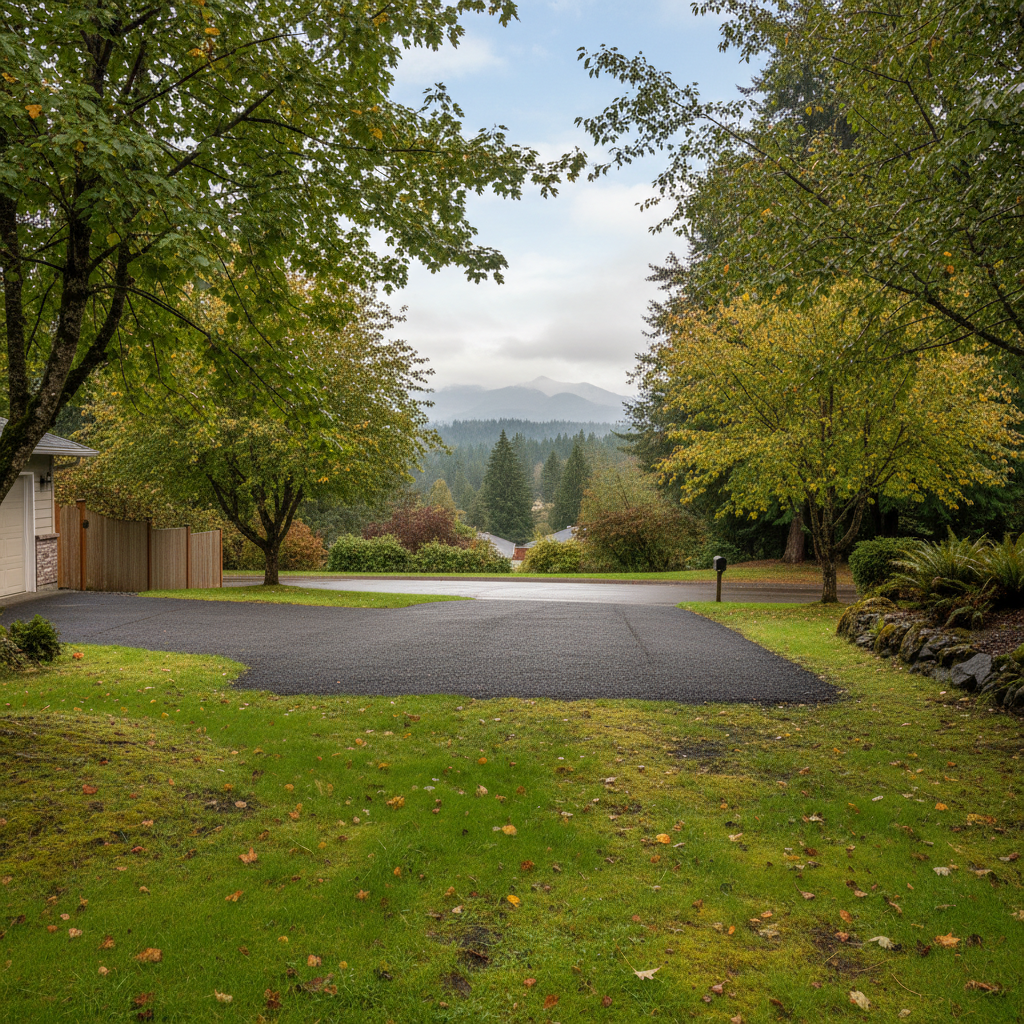
Milling Your Driveway: What's the Deal?
So, you've got cracks, potholes, or maybe your driveway just looks tired. You're probably thinking about a repair or even a full replacement. One option that often comes up is asphalt milling, and it's a smart one for a lot of situations. Essentially, milling is like shaving off the top layer of your existing asphalt. We use specialized equipment to grind down the old, damaged surface, leaving a stable base behind. This base can then be prepped for a new layer of asphalt, giving you a fresh, smooth surface without having to dig up and haul away your entire driveway.
It's a more eco-friendly option too, since the milled material can often be recycled. Plus, it can save you some money compared to a full rip-out and replace job, especially if your base layer is still in good shape. But here’s the kicker: when you do it matters a whole lot, especially around here in Redmond.
The Redmond Climate and Asphalt Milling
Our weather here in the Pacific Northwest is, well, unique. We get a lot of rain, obviously, but it's not just the rain. It's the freeze-thaw cycles, the dampness that lingers, and those occasional hot, dry spells that really impact asphalt. For milling, ideal conditions are dry and moderately warm. That means our prime window is usually late spring through early fall.
Why dry? Milling creates a lot of dust and fine particles. If it's wet, that dust turns to mud, making it tough to get a clean, consistent surface. Plus, laying new asphalt on a wet base is a recipe for disaster down the road – you'll get moisture trapped underneath, leading to premature cracking and deterioration. You don't want that. And why moderately warm? Asphalt is a temperature-sensitive material. It needs to be hot enough to be pliable and bond properly, but not so hot that it's unworkable or cools too quickly. Think 50 to 85 degrees Fahrenheit. Anything outside that range makes the job harder and the results less durable.
I've seen driveways in areas like Education Hill or Bear Creek that weren't milled or paved at the right time, and they just don't hold up. The constant moisture penetration from our winters is a real killer for poorly installed asphalt.
When to Schedule Your Milling Project
Given what I just said, you can probably guess the best time. I always tell folks to aim for May through September. That's when we typically get our driest, most consistent weather. You want a stretch of at least a few dry days before the work, and ideally a few dry days after, especially if new asphalt is going down immediately.
- Spring (May-June): Great time. The ground has usually dried out from winter, and temperatures are warming up nicely.
- Summer (July-August): Often the best. Long dry spells, consistent warmth. Perfect for milling and paving.
- Early Fall (September): Still a good window, but you've got to watch the forecasts closely. The rains can start up again, and temperatures begin to drop. We're always keeping an eye on the long-range forecast for our clients.
Trying to do milling in the dead of winter or during our heavy rainy season? Forget about it. It's just not going to give you the quality result you're paying for. We won't even schedule it then because we know it won't last.
Protecting Your Asphalt Investment Year-Round
Once you've got that fresh, smooth asphalt, you want it to last, right? Here's how to protect your investment, whether it's a newly milled and paved surface or just a well-maintained older one:
- Sealcoating: This is huge. Think of it as sunscreen for your driveway. It protects against UV rays, water penetration, and even oil spills. I recommend sealcoating every 2-3 years, depending on traffic and sun exposure. It's a small investment that pays off big time in extending your driveway's life.
- Crack Filling: Don't let small cracks become big problems. Water is asphalt's worst enemy. If you see cracks, get them filled promptly. It stops water from getting underneath and eroding the base.
- Proper Drainage: Make sure water isn't pooling on your driveway. Good drainage is key. If your driveway isn't sloped correctly, or if gutters are overflowing onto it, you're asking for trouble.
- Limit Heavy Loads: If you've got heavy trucks or RVs, try to park them in different spots to distribute the weight, or consider a thicker asphalt layer during installation.
- Clean Regularly: Sweep off debris, leaves, and dirt. This prevents organic matter from breaking down on the surface and holding moisture.
Taking care of your asphalt isn't rocket science, but it does require a little attention. If you're in Redmond and thinking about milling or any other asphalt work, give us a call at Aim High Paving Solutions. We're happy to come out, take a look, and give you an honest assessment of what your driveway needs and when's the best time to do it right.