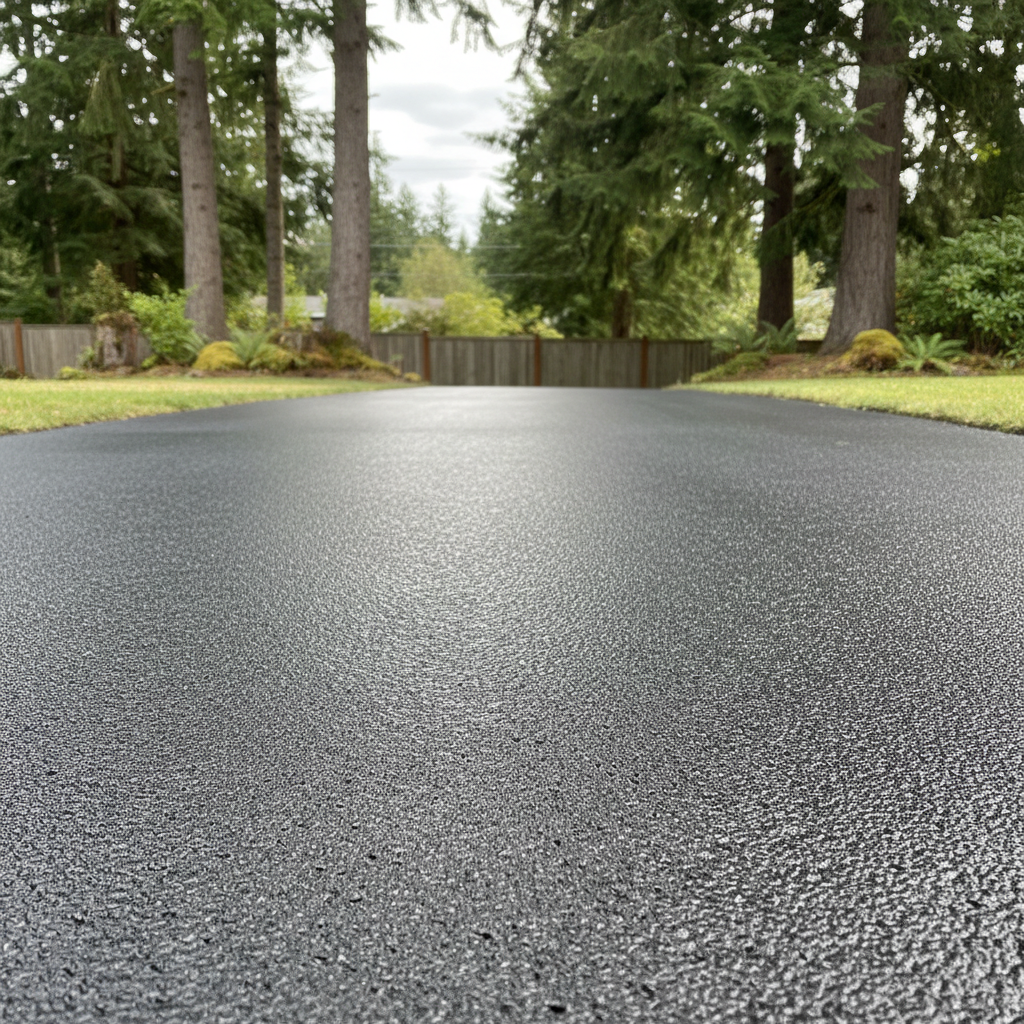
So, you're looking at your asphalt driveway and wondering if a slurry coat is the right move. Good on you for doing your homework. I get a lot of questions about this service from folks all over Redmond, from Bear Creek to Education Hill. It's a smart way to protect your investment, but there's a lot of misinformation out there. Let's clear some things up.
What exactly is slurry coating, and how is it different from sealcoating?
This is probably the most common question I hear. Think of sealcoating as a thin, protective paint job for your driveway. It's usually a liquid asphalt emulsion, sometimes with sand, applied in a thin layer. It looks great, gives UV protection, and helps shed water. It's fantastic for newer driveways or those in good condition.
Slurry coating, on the other hand, is a more substantial treatment. It's a mix of asphalt emulsion, finely graded aggregate (like sand or crushed rock), water, and some additives. Because it has aggregate, it's thicker and fills in minor cracks and surface imperfections better than a standard sealcoat. It's essentially a thin, new wearing surface. If your driveway has a bit more wear and tear, but isn't quite ready for a full repave or milling, slurry coating can be a great option. It offers a more durable, longer-lasting protective layer than just sealcoating.
How long does a slurry coat typically last in our Redmond climate?
That's a critical question, especially with our Pacific Northwest weather. You've got the rain, the freeze-thaw cycles in winter, and even some decent sun in the summer. Generally, a well-applied slurry coat should last anywhere from 5 to 10 years. That's a pretty wide range, I know, but a few things really impact it.
- Traffic volume: If you've got a busy family with multiple cars coming and going all day, it'll wear faster than a driveway used by one car.
- Drainage: Poor drainage means water sits on your driveway, which is never good for asphalt. Make sure your gutters are clear and water is directed away.
- Initial condition: If your driveway was in rough shape to begin with, even a slurry coat can only do so much. It'll still extend its life, but don't expect miracles.
- Application quality: This is huge. A proper mix, good surface prep, and skilled application are non-negotiable. That's where a company like Aim High Paving Solutions comes in.
Given Redmond's damp conditions, ensuring proper cure time and good drainage around your property is key to getting the most out of your slurry coat.
Can a slurry coat fix existing cracks or potholes?
Let's be clear: a slurry coat is a preventative and rejuvenative treatment, not a structural repair. It's great for filling in those tiny hairline cracks and smoothing out minor surface imperfections. It'll give your driveway a fresh, uniform look and help prevent those small cracks from becoming big problems.
However, if you've got significant cracks (say, wider than a quarter-inch), alligator cracking, or actual potholes, those need to be repaired *before* the slurry coat goes down. We're talking about crack filling, patching, or even milling and replacing sections. Applying a slurry coat over major damage is like putting a band-aid on a broken leg — it might look better for a bit, but it won't solve the underlying issue. Any reputable contractor will tell you this and insist on proper repairs first.
What's the process like? How long will my driveway be out of commission?
The process starts with thorough cleaning. We'll sweep, blow, and often power wash the surface to get rid of all dirt, debris, and oil stains. Any existing cracks or potholes get pre-treated or repaired. This prep work is crucial; if it's not done right, the slurry won't adhere properly.
Then, we apply the slurry mix. It's usually done in one or two layers, depending on the driveway's condition and the specific product. We use specialized equipment to ensure an even, consistent application. It's not something you can just pour out of a bucket and spread with a squeegee if you want it to last.
As for downtime, you'll typically need to keep traffic off your driveway for at least 24 to 48 hours, sometimes longer if it's cooler or very humid. We'll give you a precise timeframe based on the specific conditions on the day of application. It's an inconvenience, sure, but it's essential for proper curing and durability. Plan ahead for where you'll park your cars.
Are there any downsides or things I should be aware of with slurry coating?
Every solution has its trade-offs. Here are a few things to keep in mind:
- Temporary smell: There can be a distinct asphalt smell for a day or two after application. It's not harmful, but it's noticeable.
- Curing time: As I mentioned, you'll be off your driveway for a bit. This means planning around deliveries, guests, and your daily routine.
- Not a miracle cure: It won't fix major structural issues. If your driveway is truly failing, you might need a more extensive repair or replacement.
- Initial appearance: Sometimes, especially with darker mixes, the initial surface can feel a bit rougher than a pure sealcoat. It smooths out with a bit of traffic, but it's something to be aware of.
- Cost: It's more expensive than a simple sealcoat because it's a more robust product and application. But it also lasts longer, so it's often a better value in the long run.
How do I know if my driveway is a good candidate for slurry coating?
The best way is to have a professional look at it. But generally, if your asphalt driveway is:
- Showing signs of oxidation (it's faded gray instead of black).
- Has numerous small hairline cracks but no major structural failures.
- Has a slightly rough or worn surface texture.
- Is generally sound but just needs a refresh and extended life.
Then it's likely a good candidate. If you see large, deep cracks, significant rutting, or areas where the asphalt is crumbling, we'd probably recommend a different approach first, like patching or even milling. We're happy to come out to your place, take a look, and give you an honest assessment. No pressure, just good advice from Aim High Paving Solutions.
What kind of maintenance does a slurry-coated driveway need?
The great thing about a slurry coat is that it significantly reduces the immediate maintenance you'd have to do on an untreated driveway. But 'reduced' doesn't mean 'zero.'
- Keep it clean: Sweep off leaves and debris regularly. Don't let organic matter sit and decompose on the surface.
- Address spills quickly: Oil, gas, and other chemicals can break down asphalt over time. Clean up spills as soon as you can.
- Trim edges: Keep grass and weeds from growing into the edges of your driveway. Their roots can cause damage.
- Monitor for cracks: Even with a slurry coat, new cracks can eventually form, especially with our Redmond soil conditions and tree roots. Catching and filling these small cracks early will prevent them from becoming larger issues and extend the life of your slurry coat even further.
That's the straight talk on slurry coating. It's a solid investment for the right driveway, and knowing what to expect will help you make the best decision for your home.